


Northeast India · Khoji Routes
Tripura
The Royal Land — palaces on water, ancient rock carvings, and a kingdom that lasted two thousand years
01 — The Royal Palace
Ujjayanta Palace
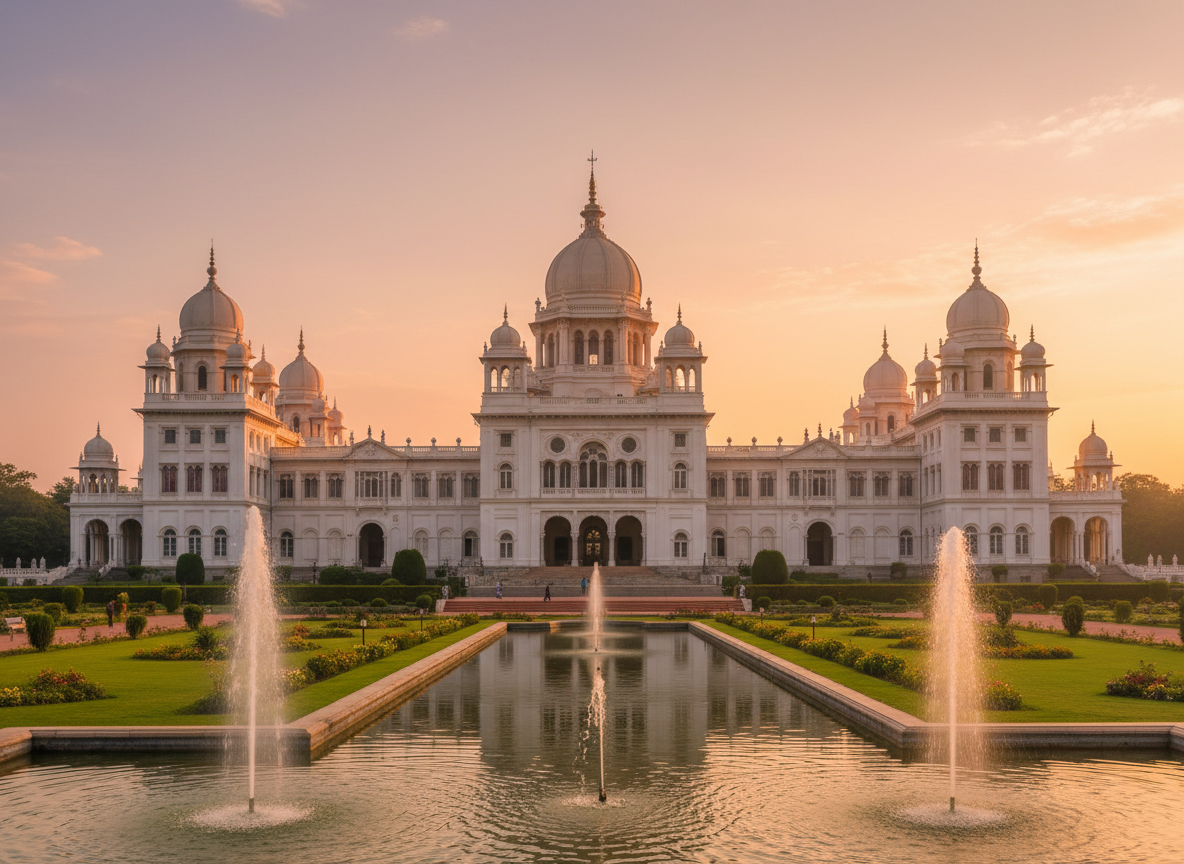
The crowning achievement of the Manikya dynasty, Ujjayanta Palace stands at the heart of Agartala as a testament to a royal lineage that ruled Tripura for nearly two millennia. Built in 1901 by Maharaja Radha Kishore Manikya with a blend of Mughal and European architectural influences, the palace sits within vast Mughal gardens with twin lakes that mirror its white-and-terracotta facade. Today it houses the Tripura State Museum, whose collections span tribal costumes, royal artefacts, and natural history. The palace is most beautiful at dusk, when its reflection trembles in the lake water and the lights begin to come on.
Best time to visit: October to March | Don’t miss: The Mughal gardens and the palace illuminated at night
02 — The Water Palace
Neermahal Palace
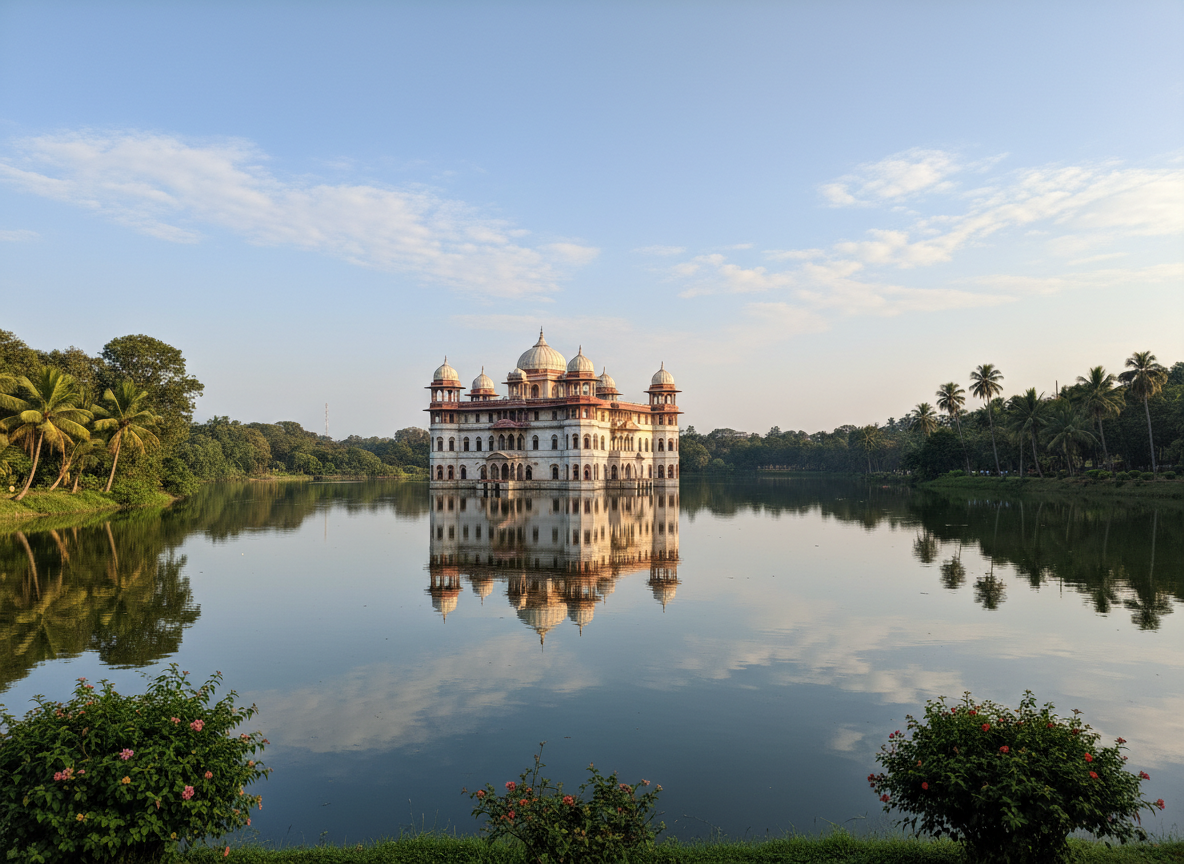
Built in the middle of Rudrasagar Lake in 1930, Neermahal is the only water palace in eastern India — a structure that rises directly from the lake’s surface, its white towers and red domes perfectly doubled in the still water below. Maharaja Bir Bikram Kishore Manikya built it as a summer retreat, combining Hindu and Mughal architectural styles in a building that looks most magical at sunrise, when the lake is glassy and mist drifts between the towers. You reach it by boat from the lakeside ghat, a short crossing that adds to the sense of arrival. At the Kharchi Puja festival each July, the lake around the palace fills with boats and devotees.
Best time to visit: October to March | Don’t miss: Sunrise boat ride to the palace and Kharchi Puja (July)
03 — The Lost Shrine
Unakoti
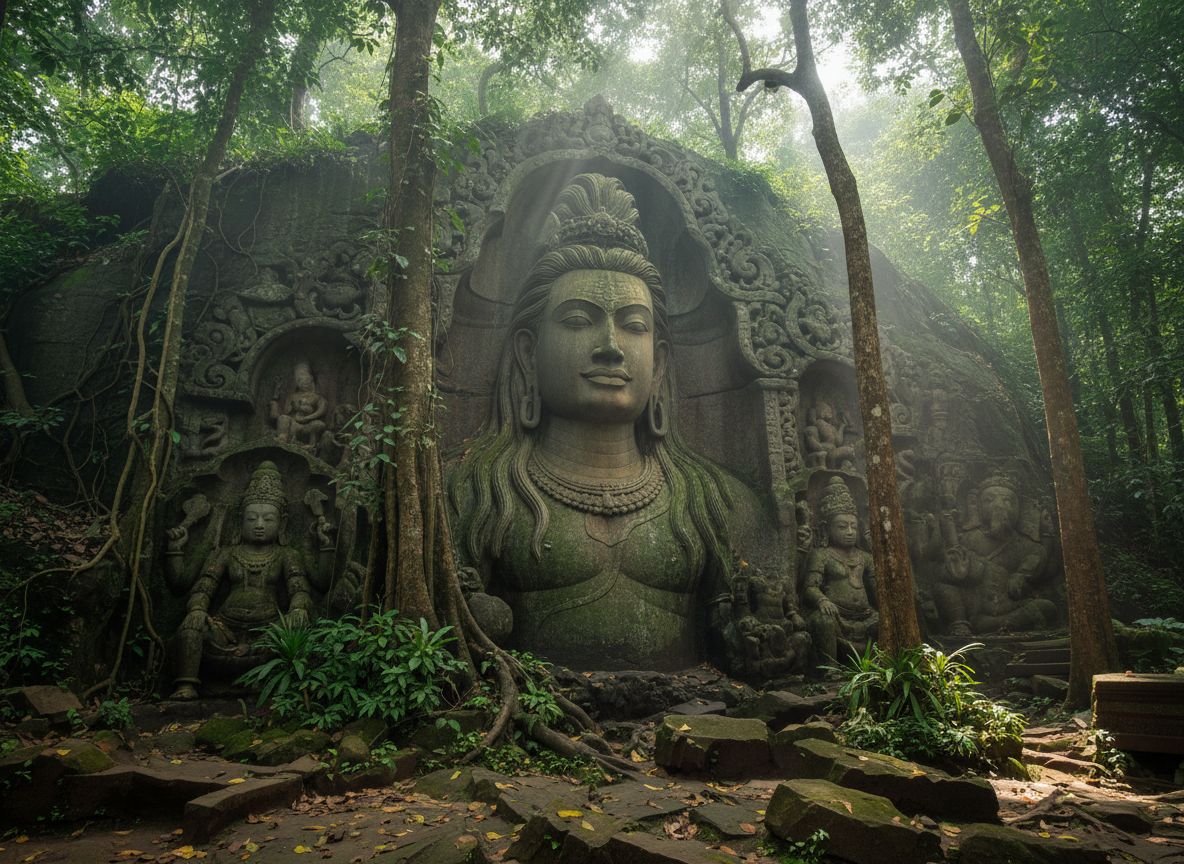
Hidden in the jungle of north Tripura, Unakoti is one of the most extraordinary and least visited archaeological sites in India. The name means ‘one less than a crore’ — and legend holds that the gods rested here on their way to Kashi, and Shiva left behind 9,999,999 images of himself and other deities carved into the rock face. The carvings — some dating back to the 7th or 8th century — emerge from the hillside at massive scale: a Shiva head nearly 30 feet tall, relief panels of Ganesha and Durga, and carved Nandi figures, all draped in jungle greenery and misted over by a waterfall that cascades directly past the carvings.
Best time to visit: October to March | Don’t miss: The massive Shiva rock carving and the jungle waterfall
04 — The Orange Hills
Jampui Hills
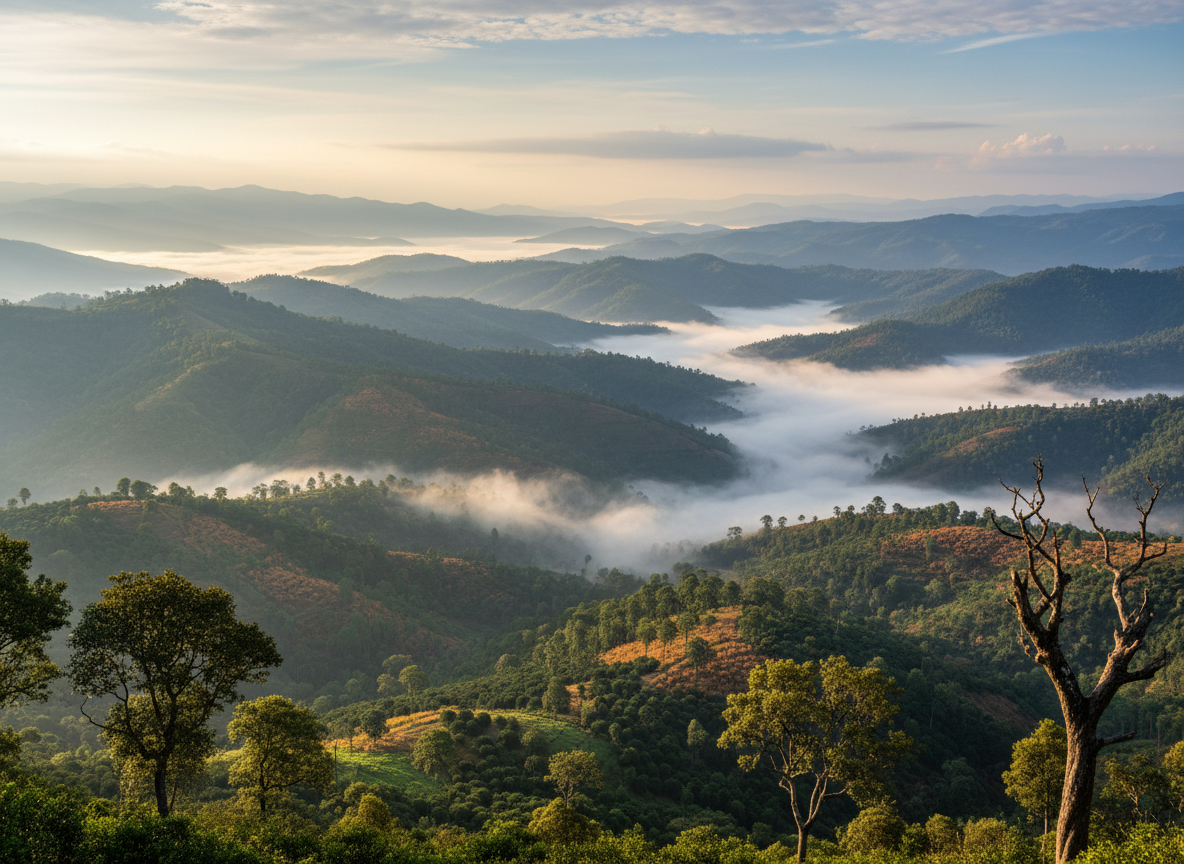
The highest range in Tripura, the Jampui Hills rise along the Bangladesh border at around 1,000 metres, draped in orange orchards that give the range its other name — the Orange Bowl of Tripura. The Reang and Mizo communities who live here have maintained a way of life shaped by the hills: bamboo houses perched on slopes, community weaving traditions, and a quiet agricultural rhythm tied to the seasons. Sunrise from the ridges of Jampui — looking west over the plains of Bangladesh and east into Mizoram — is one of those views that earns the journey to reach it.
Best time to visit: November to February (orange harvest) | Don’t miss: Sunrise from the ridge and the orange orchards in bloom
05 — The Wild Heart
Sepahijala Wildlife Sanctuary
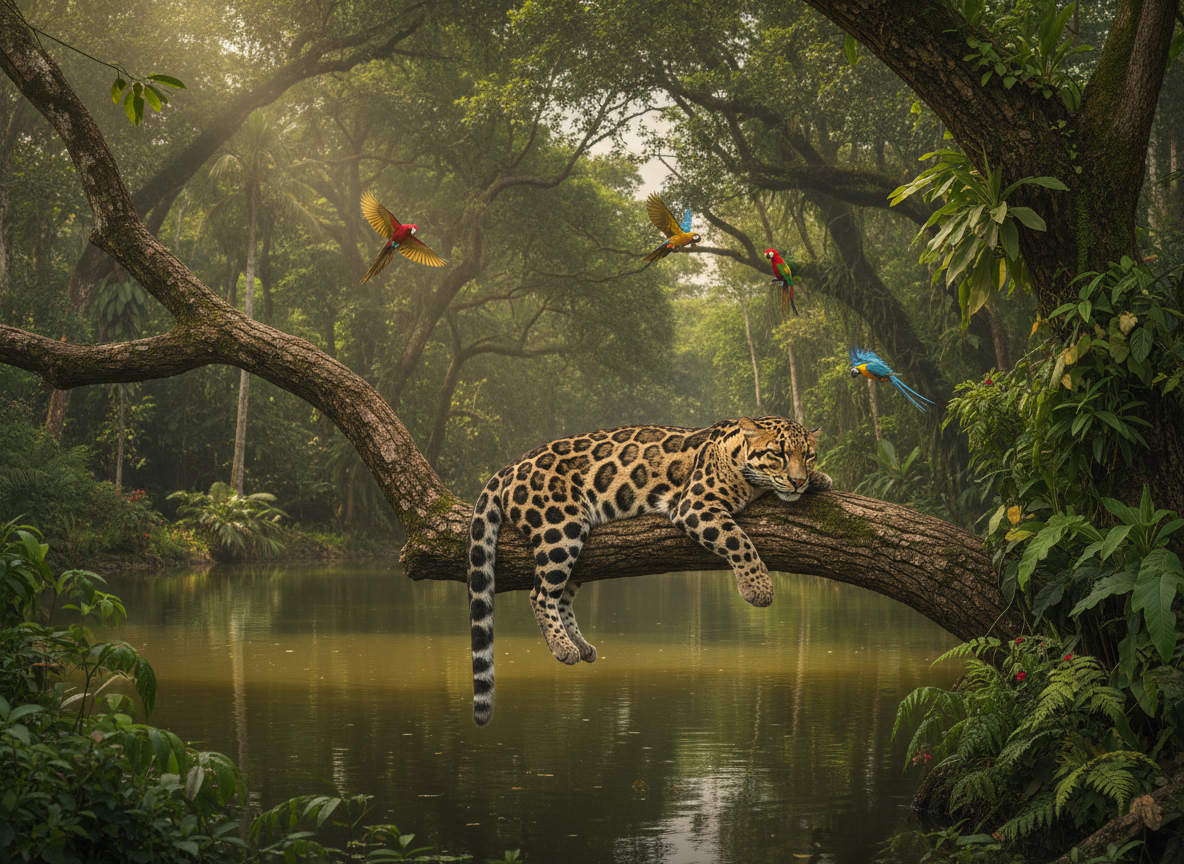
Just 25 km from Agartala, Sepahijala is one of northeast India’s most accessible wildlife sanctuaries — a mosaic of tropical moist deciduous forest, wetlands, and open grasslands that shelters clouded leopards, spectacled monkeys, and over 456 species of birds. The sanctuary’s botanical garden and small zoo make it a destination for families and naturalists alike. The best mornings here are spent on the forest trails before the heat sets in, with binoculars trained on the canopy where the rarest birds reveal themselves.
Best time to visit: November to March | Don’t miss: The clouded leopard enclosure and early morning birdwatching trails

