


Meghalaya
The Abode of Clouds — living bridges, crystal rivers, and the wettest hills on Earth
Shillong
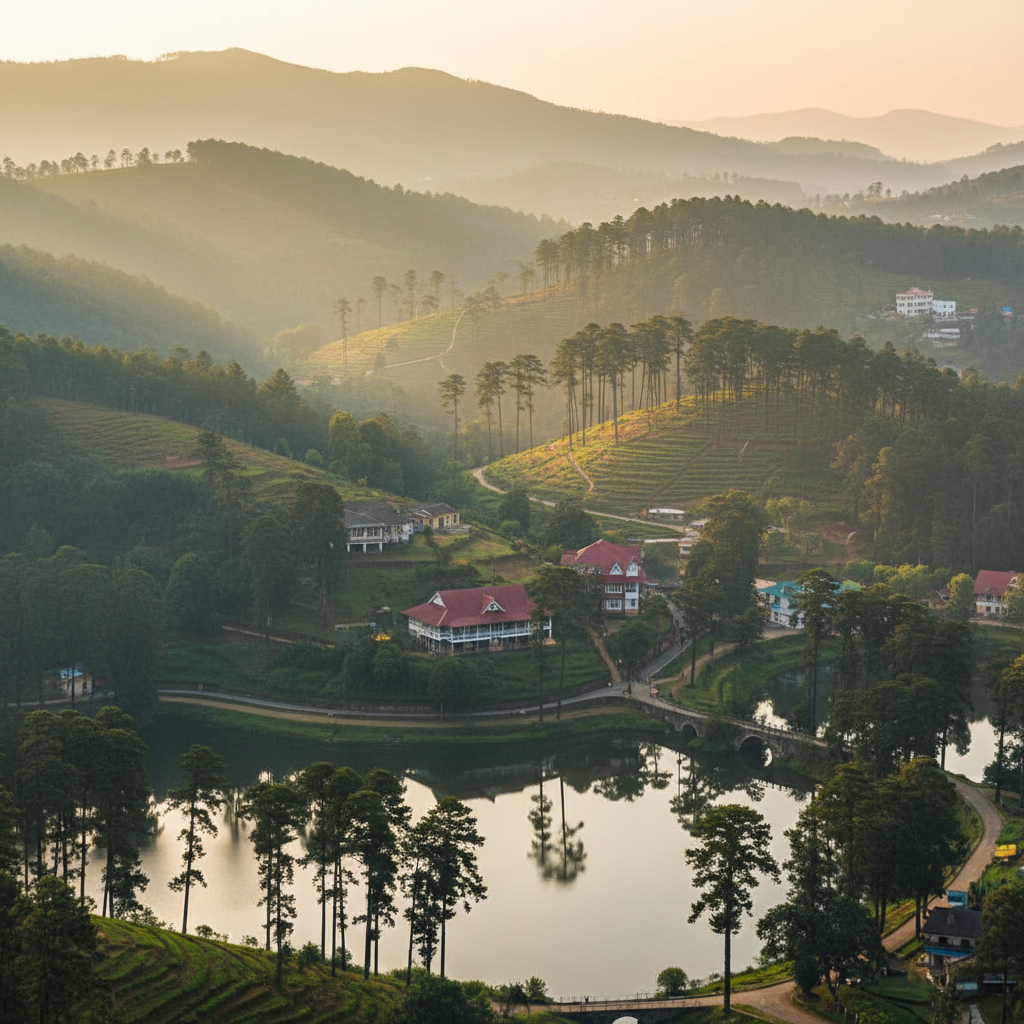
Called the Scotland of the East by the British, Shillong still carries an air of colonial ease blended with the deep cultural energy of the Khasi people. The capital of Meghalaya sits at 4,900 feet surrounded by pine forests and rolling hills, with Ward’s Lake, the Umiam Lake viewpoint, and the chaotic charm of Police Bazaar all within reach. The city has a thriving music scene — rock bands play in local venues most nights, a legacy of the Khasi love for guitar that stretches back decades. Shillong is a good base and a genuinely enjoyable destination in its own right.
Best time to visit: October to June | Don’t miss: Shillong Peak viewpoint and the local music scene
Cherrapunji (Sohra)
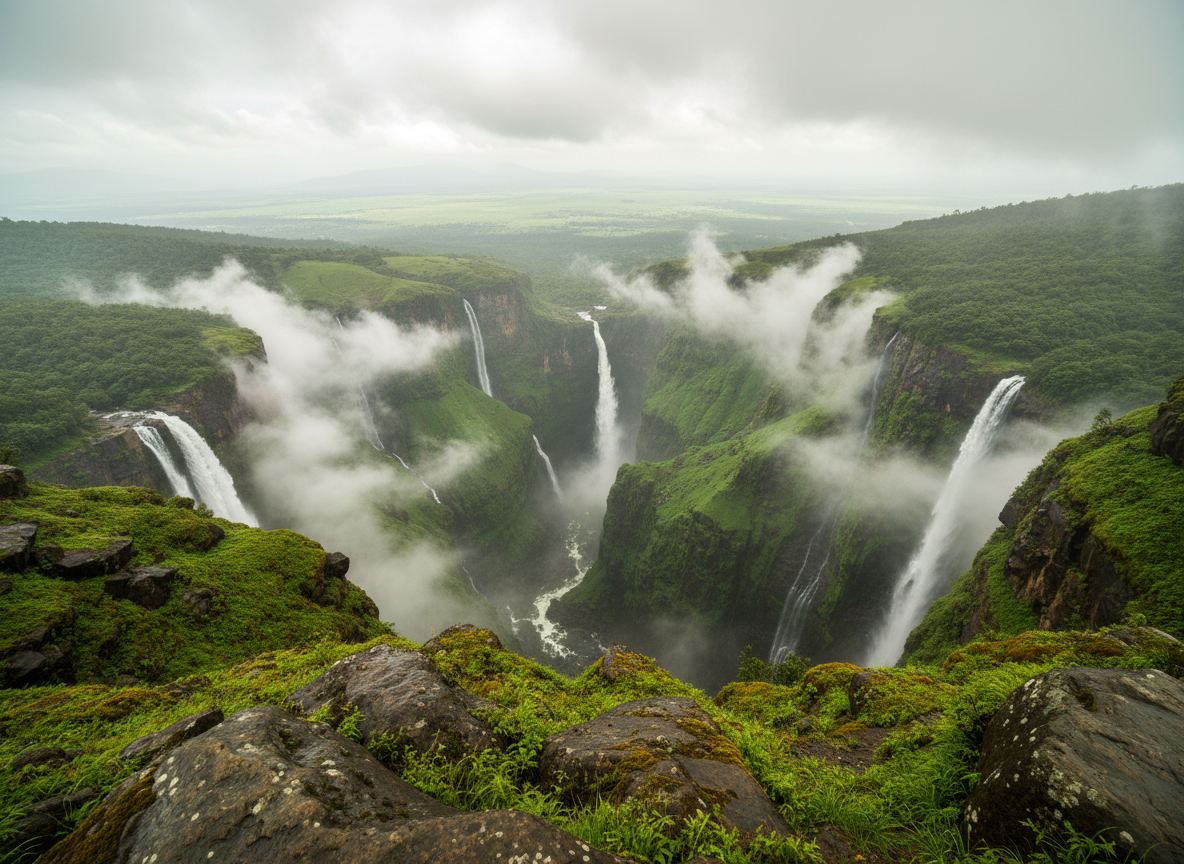
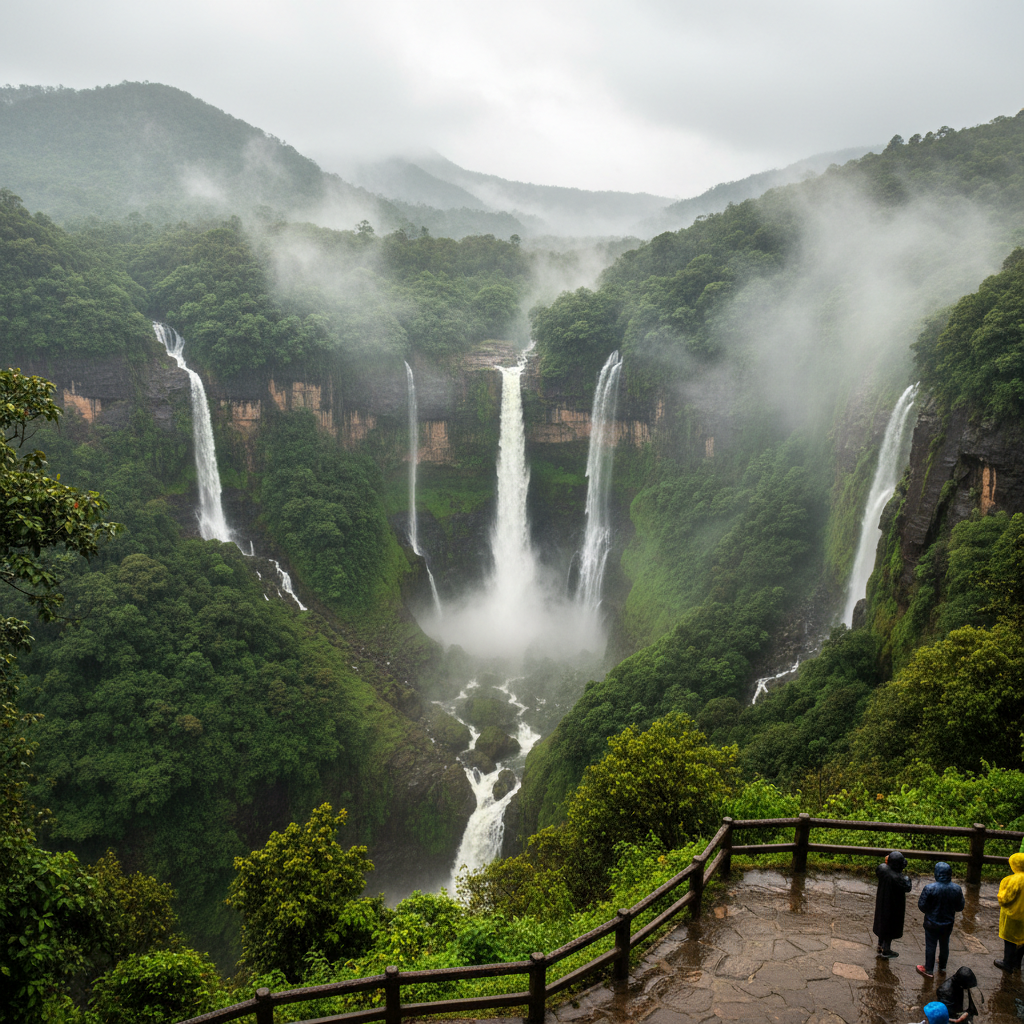
Once recorded as the wettest place on Earth, Cherrapunji — or Sohra as the Khasi people call it — is a landscape defined by water. Waterfalls pour off the plateau edge into a 1,000-metre gorge, with the plains of Bangladesh stretching to the horizon on clear days. The Nohkalikai Falls, one of India’s tallest, drops into a strikingly blue-green plunge pool. Even in the dry months, the cliffs are streaked with the memory of a thousand monsoons. Come during the rains if you dare — there is nothing quite like standing at the edge of a cloud.
Best time to visit: October to May (dry) or July–August (monsoon drama) | Don’t miss: Nohkalikai Falls and the Seven Sisters Falls viewpoint
Dawki
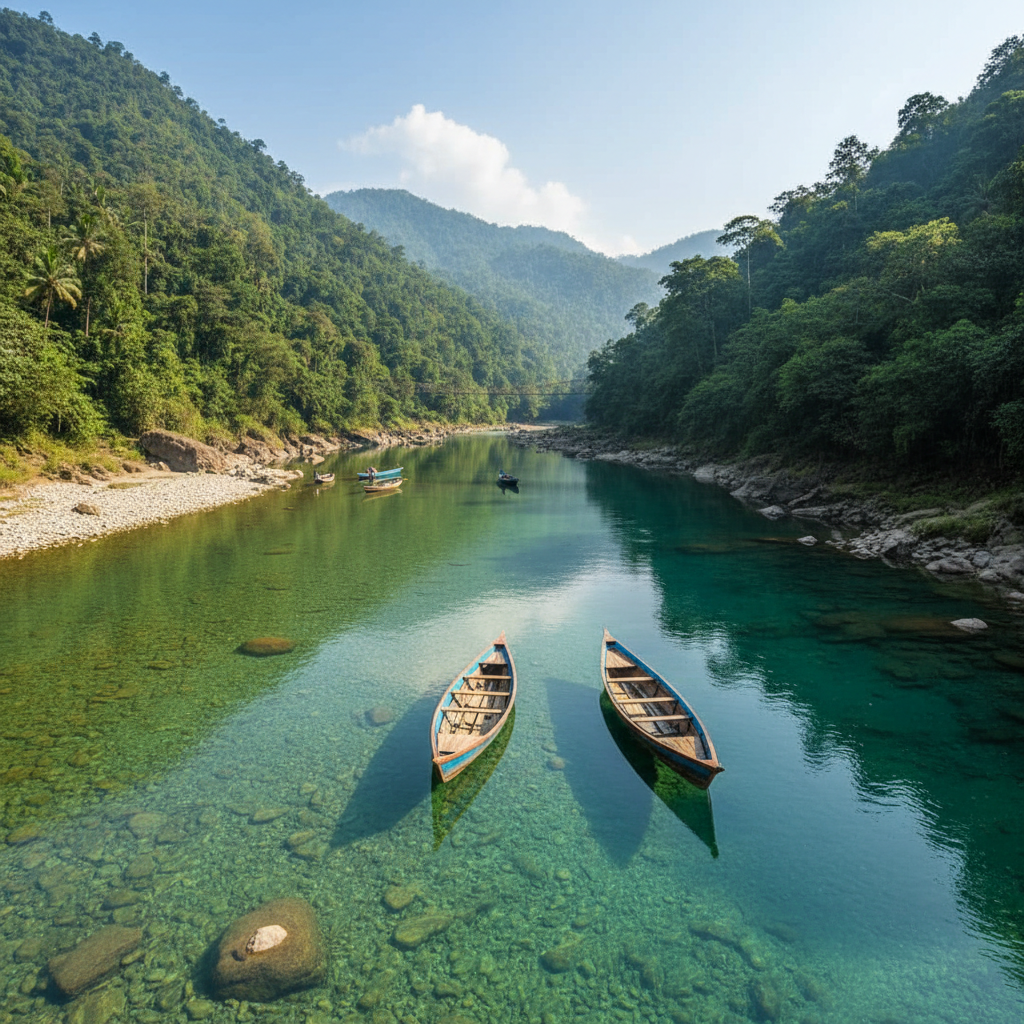
The Umngot river at Dawki is one of those places that photographs don’t do justice — and photographs of it are already extraordinary. The water is so impossibly clear that boats appear to float suspended in mid-air above a visible riverbed of smooth stones. Dawki sits on the Bangladesh border; on the other side of the suspension bridge, the river continues its journey through a different country. Boat rides on the Umngot are best done in the morning before the light shifts, when the water turns from turquoise to glass.
Best time to visit: October to April | Don’t miss: Early morning boat ride on the Umngot river
Mawlynnong
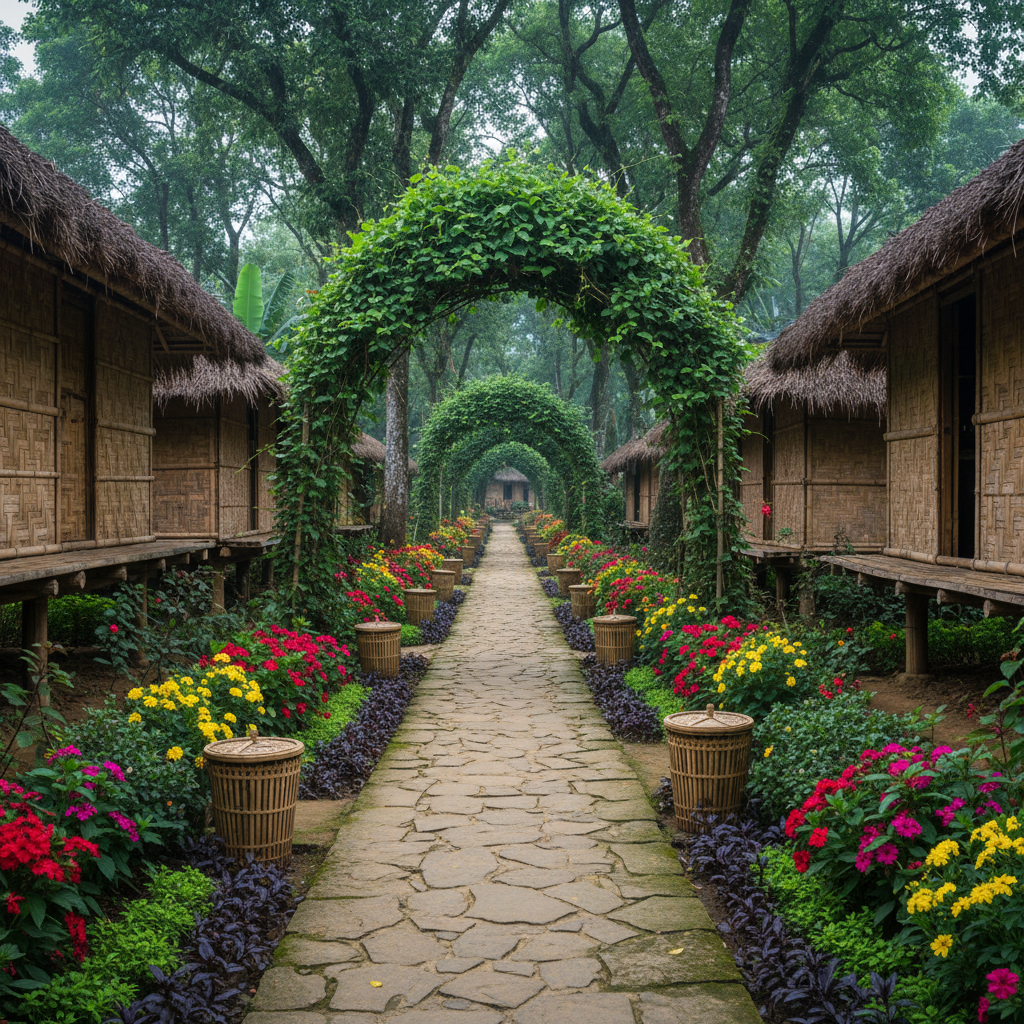
Declared Asia’s Cleanest Village, Mawlynnong has earned its reputation — bamboo dustbins line spotless pathways, flowering plants cascade from every corner, and the community’s pride in their environment is visible in every detail. But Mawlynnong is more than a tidy village: it’s a window into Khasi matrilineal society, where land and lineage pass through the mother, and women hold genuine authority in community decisions. A bamboo sky walk at the edge of the village offers a sweeping view over the plains of Bangladesh stretching into the hazy distance.
Best time to visit: October to May | Don’t miss: The bamboo sky walk and the living root bridge nearby
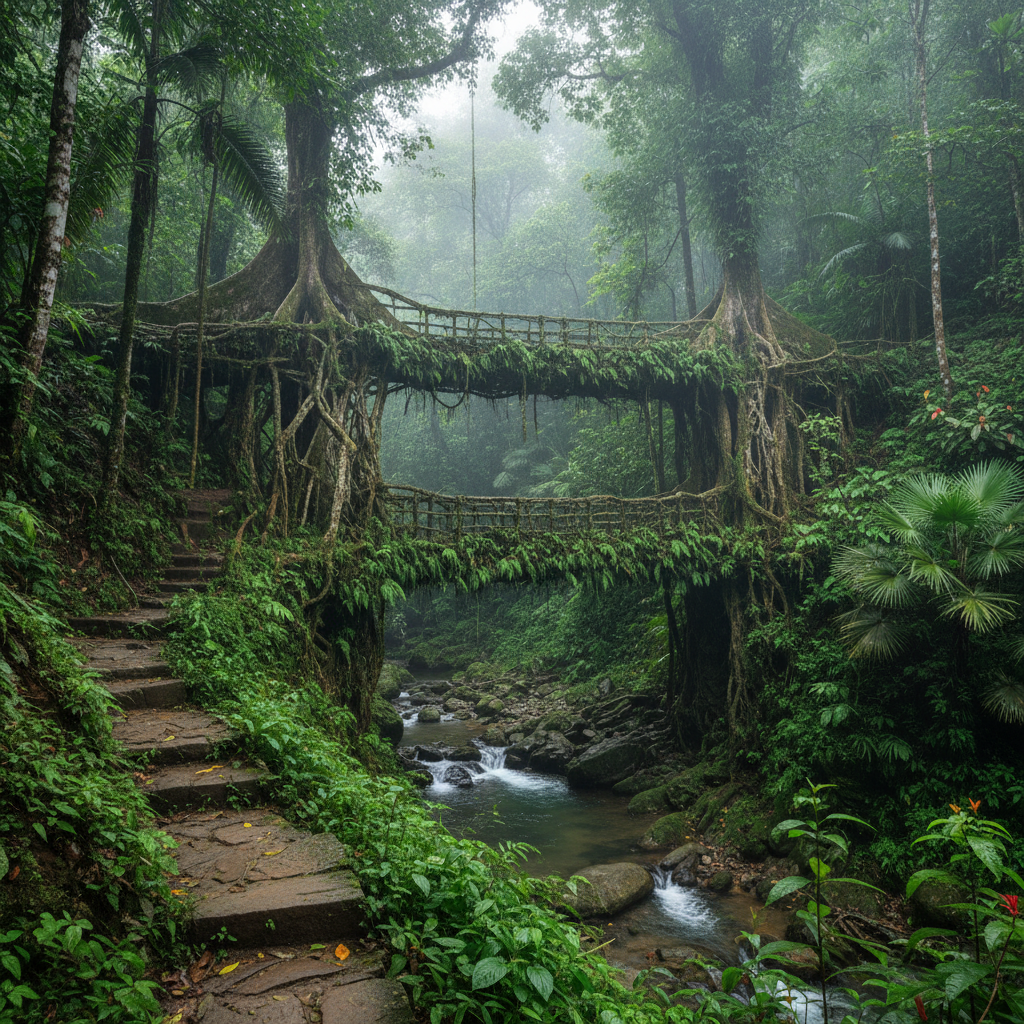
Nongriat – Double Decker Living Root Bridge
The Double Decker Living Root Bridge is one of the most extraordinary natural structures on the planet — two tiers of bridges formed entirely from the aerial roots of ancient rubber fig trees, guided and trained by generations of Khasi villagers over centuries until the roots fused into living walkways strong enough to carry dozens of people. Reaching Nongriat requires descending roughly 3,500 steps through dense jungle — and climbing back up. It is hard work, genuinely worth every step, and one of those experiences that stays with you long after the ache in your legs fades.
Best time to visit: October to May | Don’t miss: The natural swimming pool near the bridge — swim in it

