


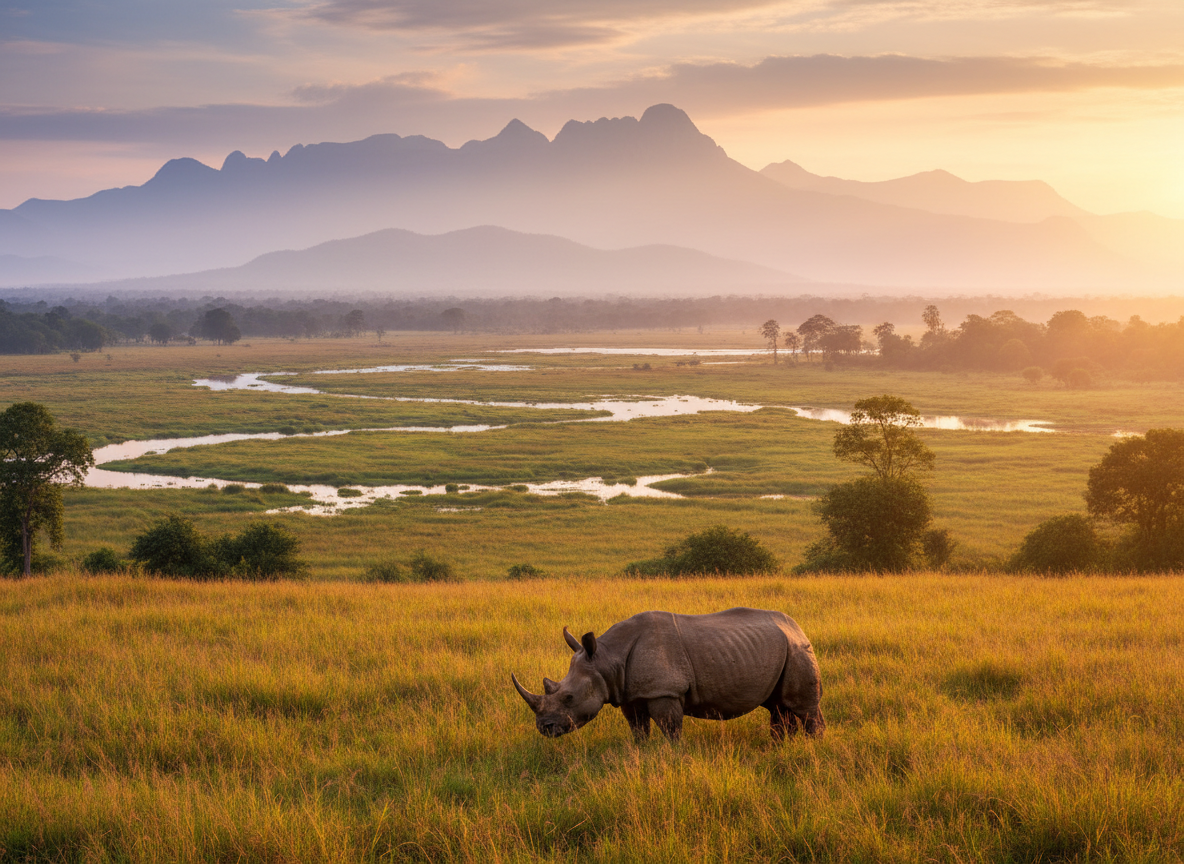
Assam
Land of the Red River and Blue Hills — where wildlife roams free and ancient traditions endure
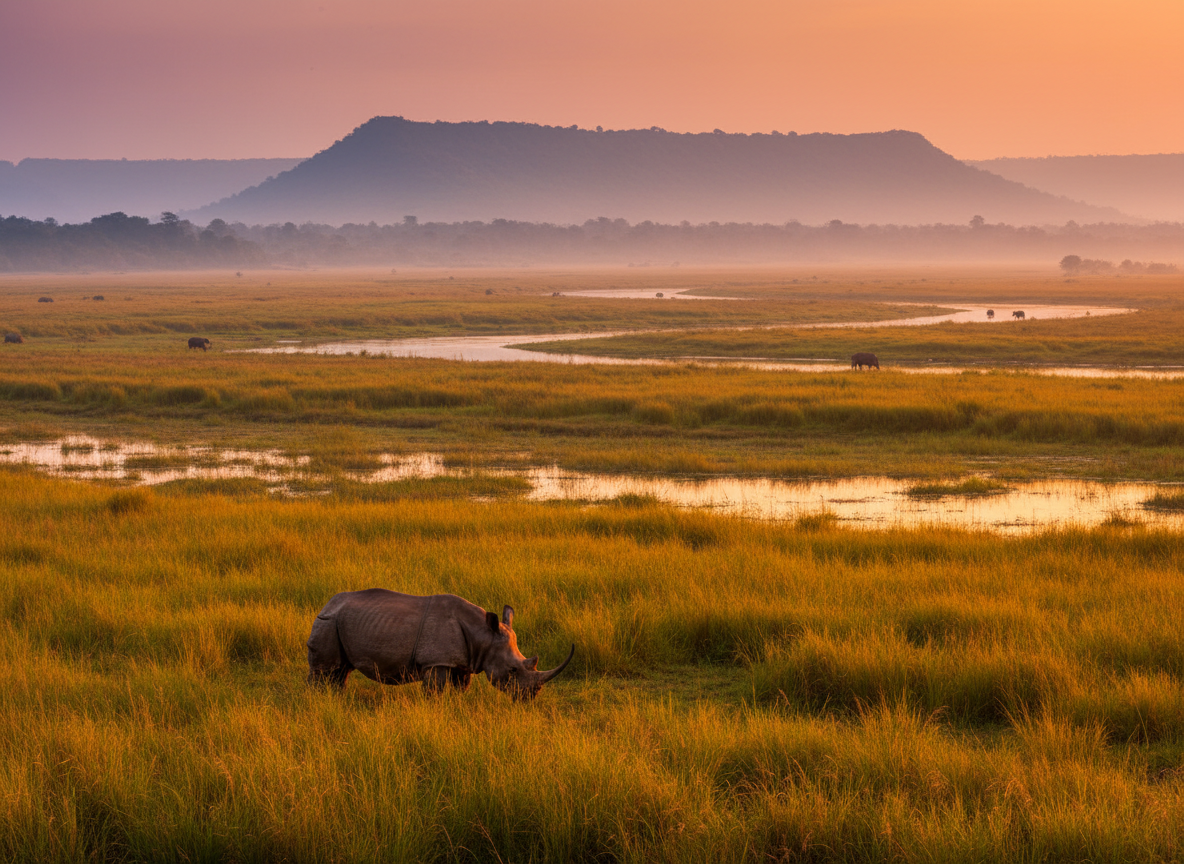
Kaziranga National Park
A UNESCO World Heritage Site and one of India’s crown jewels of conservation, Kaziranga is home to the world’s largest population of the endangered Indian one-horned rhinoceros. Spread across the floodplains of the Brahmaputra, the park shelters tigers, wild elephants, swamp deer, and over 480 species of birds. Jeep and elephant safaris take you deep into tall elephant grass and dense forests where wildlife encounters feel genuinely wild — not curated.
Best time to visit: November to April | Don’t miss: Sunrise jeep safari in the Central Range
Majuli Island
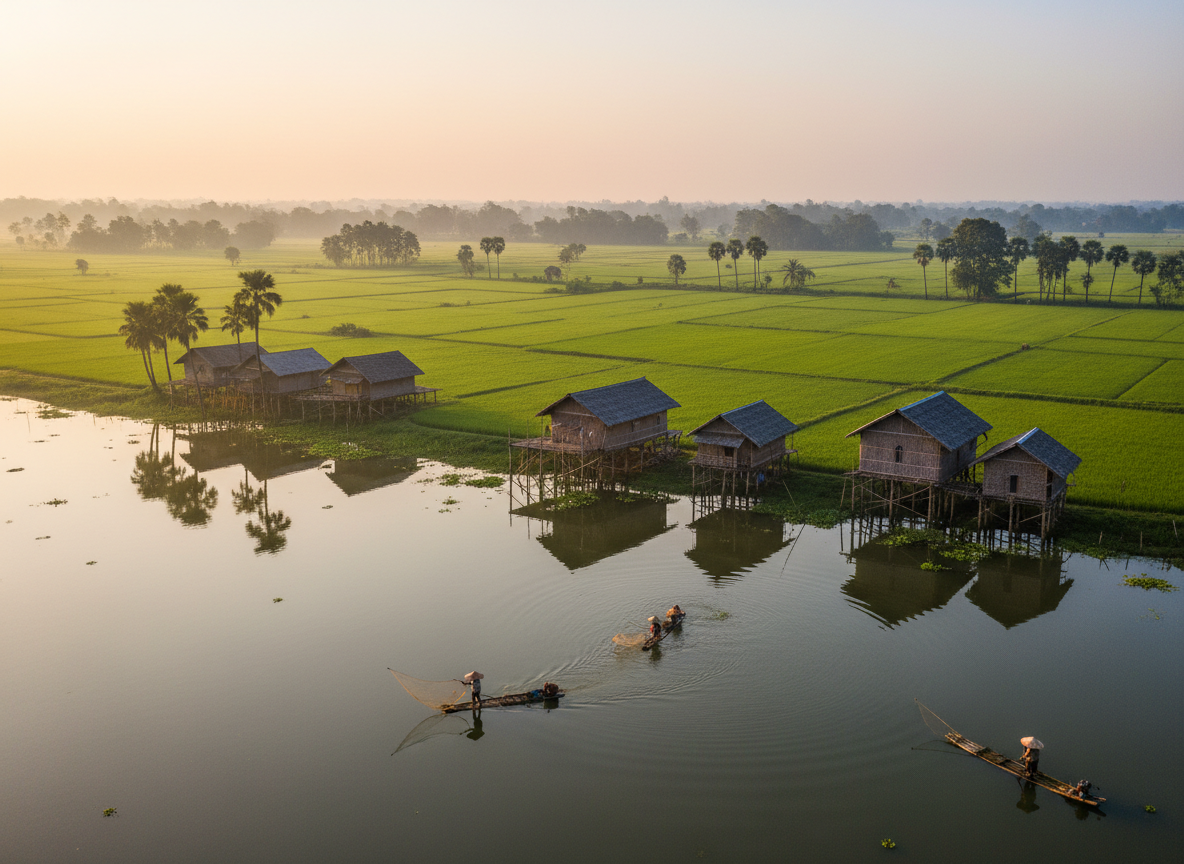
The world’s largest river island sits in the middle of the Brahmaputra — a fragile, living landmass that changes shape with every monsoon. Majuli is the cultural heartland of Assam, home to ancient Vaishnavite monasteries called Satras where centuries-old mask-making, music, and dance traditions are still alive. The island moves at its own pace: cycle through paddy fields, share meals with Mishing tribe families in their bamboo stilt homes, and watch the river turn gold at dusk.
Best time to visit: October to March | Don’t miss: Raas Mahotsav festival (November)
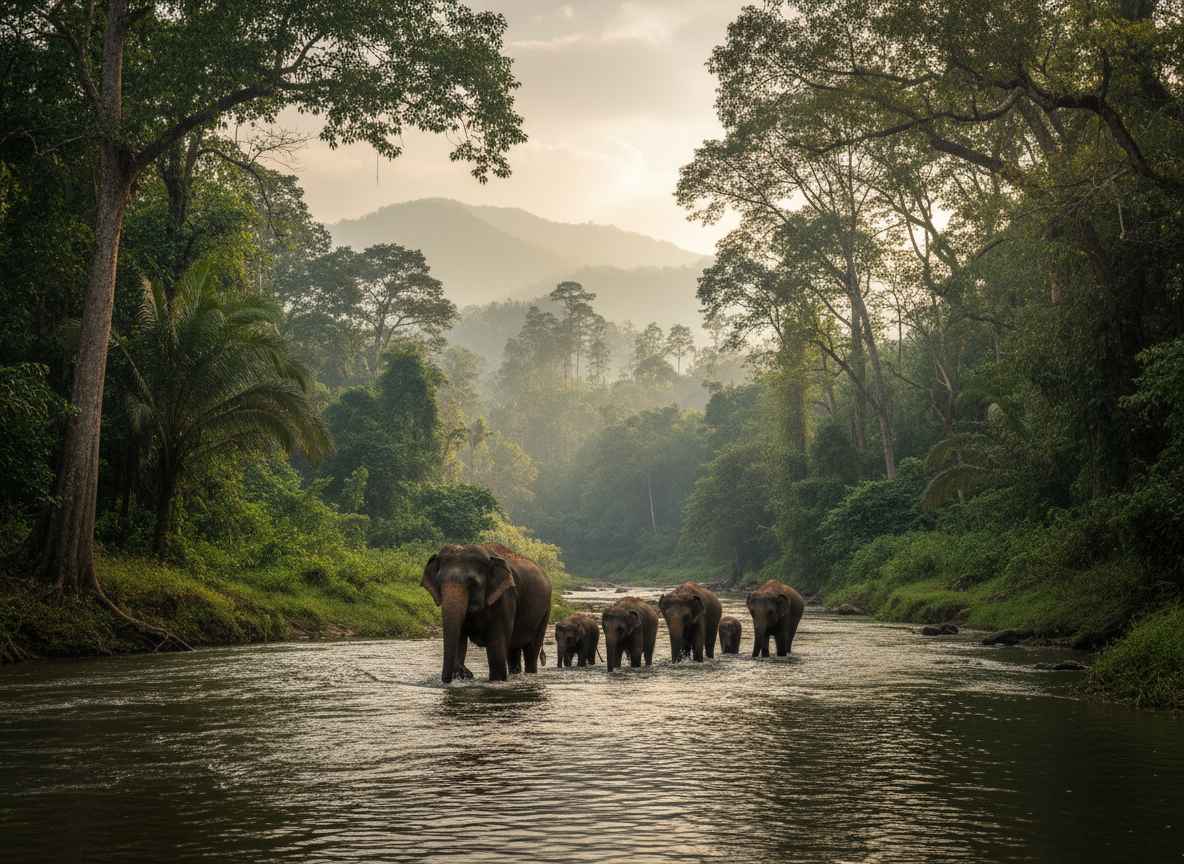
Manas National Park
A UNESCO World Heritage Site, Tiger Reserve, Elephant Reserve, and Biosphere Reserve all in one — Manas wears its credentials quietly. Unlike the more tourist-heavy parks, Manas retains a raw, untamed character. The Manas river cuts through sal forests and grasslands on the Bhutan border, sheltering tigers, clouded leopards, golden langurs, pygmy hogs, and the rare hispid hare. Conservation success here is a genuine comeback story after decades of conflict.
Best time to visit: November to April | Don’t miss: River safari along the Manas river
Kamakhya Temple, Guwahati
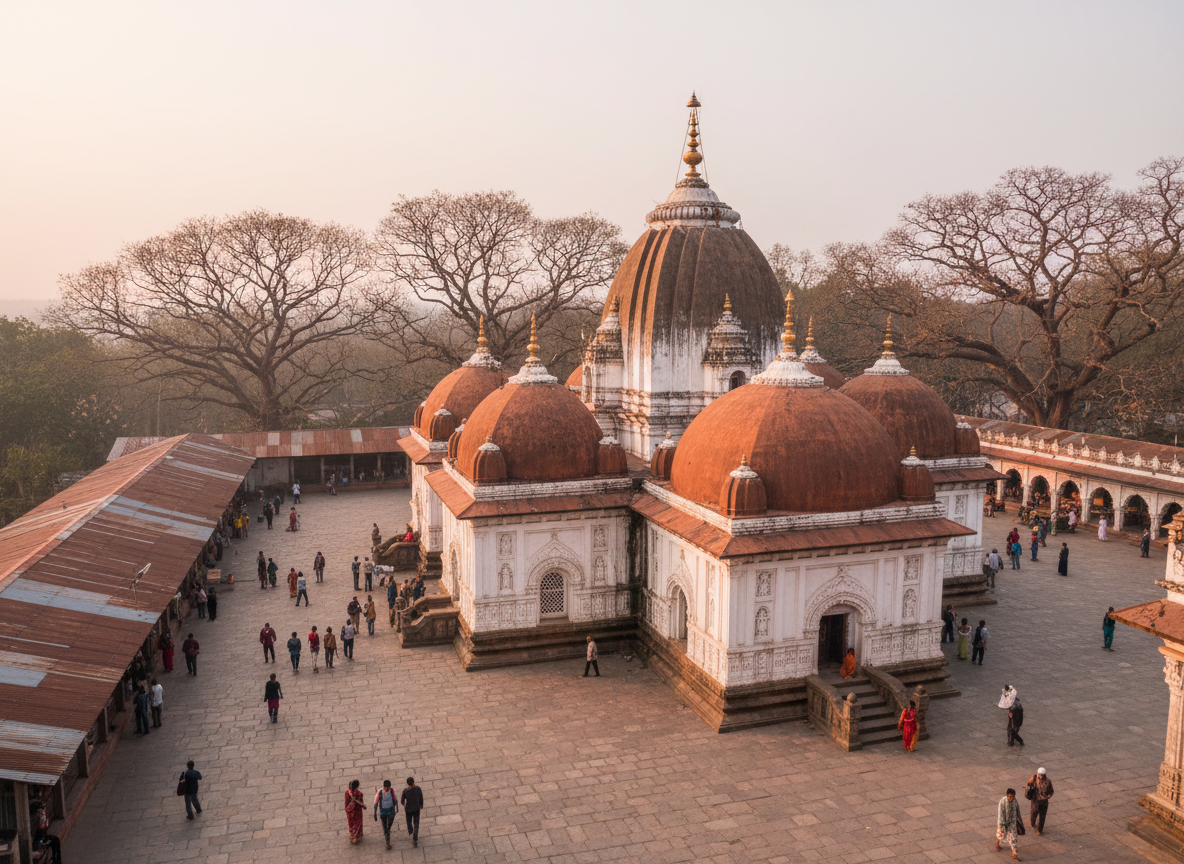
Perched atop Nilachal Hill overlooking the Brahmaputra, Kamakhya is one of the 51 Shakti Peethas and among the most powerful tantric shrines in the subcontinent. The temple’s beehive-shaped shikhara and the charged atmosphere within draw pilgrims, tantric practitioners, and curious travellers from across the world. The annual Ambubachi Mela transforms the hillside into a sea of devotion. Even for non-pilgrims, the temple’s history, architecture, and panoramic views make it unmissable.
Best time to visit: October to March | Don’t miss: Ambubachi Mela (June)
Pobitora Wildlife Sanctuary
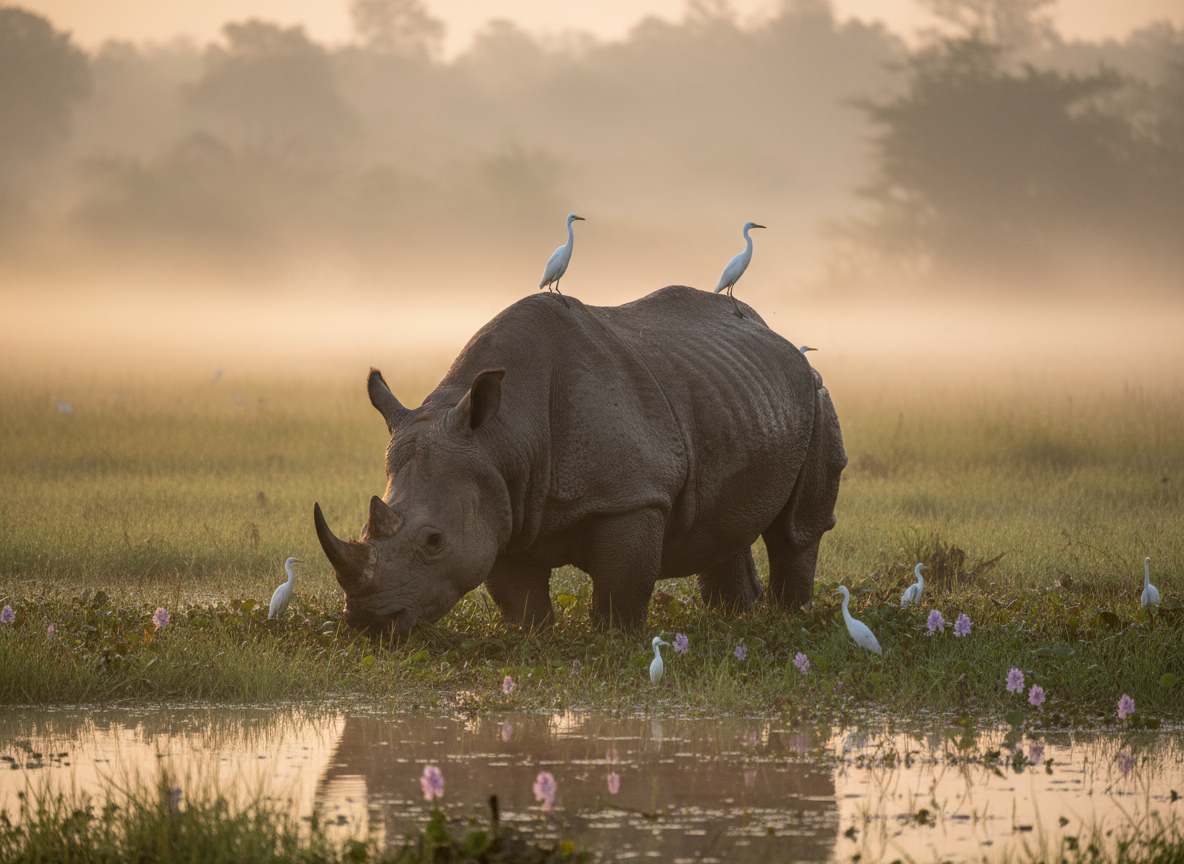
Don’t let the size fool you — Pobitora packs the highest density of Indian one-horned rhinos anywhere on the planet into a relatively compact sanctuary just 50 km from Guwahati. The wetlands and grasslands also host migratory birds in enormous numbers during winter, making it a birder’s delight. It’s often overlooked in favour of Kaziranga, which means you’ll have the jeep trails almost to yourself — a rare thing in Indian wildlife tourism.
Best time to visit: November to March | Don’t miss: Early morning rhino sightings and winter birding
 khoji routes